Author: admin
The list of approved members for the GRG from 2018 to 2020
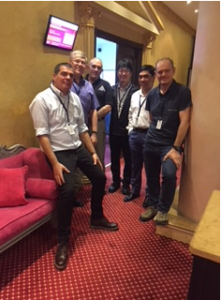
Co-Chair of GRG, Mr. David Sochor and Mr. Anwar Abdullah
| Name | Country | Position | Email address |
| David Sochor | Switzerland | Co-Chair | [email protected] |
| Anwar Abdullah | Singapore | Co-Chair | [email protected] |
| Annika Coll | Spain | Member | [email protected] |
| Sebastian Mocarquer | Chile | Member | [email protected] |
| Silvia Ballen | Colombia | Member | [email protected] |
| Johnny Ramírez Zumbado | Costa Rica | Member | [email protected] |
| David Lewis | Australia | Member | [email protected] |
| Paul Burns | New Zealand | Member | [email protected] |
| Chen Hong | China | Member | [email protected] |
| Mohammed Alshahrani | Saudi | Member | [email protected] |
| Firas Falah Abu Al Sondos | Jordan | Member | [email protected]; [email protected]; |
| Samghouli Soufian | Morocco | Member | [email protected] |
| Belit Tasdemir | Turkey | Member | [email protected] |
| Martin Evers | Netherlands | Member | [email protected] |
| Vasily Evseev | Russia | Member | [email protected]; [email protected] |
2020
The 7th GRG meeting took place from 3 to 5 February in Geneva
Annex A – Feedback on INSARAG Guidelines 2020
Annex B – Shifting of Selected Annexes, Forms and Checklists
Annex C – Updates to INSARAG.org (INSARAG Guidelines, TRL, Guidance Notes
Salient Pointers: Co-Chairmanship Working Model – GRG 2020
GRG 2020_ Co-Chair Write-up document
2019
The 6th GRG Meeting took place from 9 to 11 December 2019 in The Hague, Netherlands
Coverning Note on TRL and Guidance Notes
Annex C _ TRL Navigation Overview
::::::::::::::::::::::::::::::::::::::::::::::::::::::::::::::::::::::::::::::::::::::::::::::::::::::::::::
The 5th GRG Meeting took place from 6 to 8 October 2019 in Santiago de Chile, Chile
GRG Anney A proposal for coour coding system
Key Takeaways for GRG TWG Meeting
:::::::::::::::::::::::::::::::::::::::::::::::::::::::::::::::::::::::::::::::::::::::::::::::::::::::::::::
Final version of the 3rd GRG Meeting Chairman Summary which took place from 4 to 8 February in Geneva during the Humanitarian Network Partnership Week (HNPW)
3rd GRG Meeting Chairman Summary
4th Meeting of GRG, 12-14 June 2019, Singapore
The INSARAG Guidelines Review Group(GRG) Meeting hosted by the Co-Chair, Singapore, is taking place this week with 15 expert participants from 11 countries representing the Americas, Africa, Europe, the Middle-East, and the Asia-Pacific regional groups. The INSARAG Steering Group as directed the GRG to conduct the 5 yearly extensive review and consultations with the global network for a version 2020-25, and to be launched at the 30th Anniversary of INSARAG in Warsaw, Poland in October 2020.
The INSARAG Guidelines are the cornerstone of the globally accepted global standards as endorsed by UN GA 57/150 of 16 December 2002 and guides member countries on urban seach and rescue(USAR) preparedness and response arrangements.

2018
The GRG 2020 also apprised the TLs on the overall plan and current status of work.
In the breakout session, the GRG 2020 will engage the TLs on the matter of the Technical Guidance Reference Library/Best Practice. Regular engagement and close coordination with the INSARAG Working Groups is imperative to the achievement of the objective of a comprehensive reviewed Guidelines. The outcome of this engagement will be captured in the chairman’s summary and be shared with the INSARAG Network.
The XVI Meeting of the INSARAG Americas Regional Group as well as the IV Consultation meeting on the emergency response cooperation mechanism of the United Nations Disaster Assessment and Coordination (UNDAC) team, were held in Guayaquil, Ecuador from 29 November to 1 December 2017.
The meeting was hosted by the Secretariat of Risk Management of Ecuador and co-organised by the United Nations Office for the Coordination of Humanitarian Affairs (OCHA) in its capacity as INSARAG Secretariat and UNDAC system manager.
A total of 44 participants from 21 countries and OCHA participated it the meeting.
The chairman summary, with its annexes, including the list of participants, can be found below.
The INSARAG Africa, Europe and Middle East (AEME) Regional Group meeting was held on 14-15 November 2017 in Istanbul, Turkey, generously hosted by the Government of Turkey and the Disaster and Emergency Presidency of Turkey (AFAD). The meeting which brought together 85 participants from the region and beyond representing 27 countries aimed at electing a Regional Troika 2018, finalizing the INSARAG AEME Regional Plan for 2018, discussing the key INSARAG issues following the 2017 INSARAG Steering Group meeting, namely: IER Pre-Greening Arrangements, Light Teams Quality Assurance Standards, National Accreditation Processes, UCC and KoBo implementation and IEC/R Requirements and the INSARAG Guidelines Version 2020 and other essential matters.
Documents:
Please find attached the 4 ICMS Handbooks (Excon, RDC, Team and UCC guides) in English and Italian through the following link:
http://portal.undac.org/pssuportal/portalrest/filesharing/download/public/fakEWuesEhoT3HX
Note From IMWG
We are all facing a situation that we only know from exercises or films. Even I could never have imagined that we were on the way to a complete shutdown in Germany.
Assuming that there will be no Face to Face meeting in 2020 we look for alternatives.
In order to prepare for any upcoming USAR Mission, IMWG has started to distribute the ICMS user licenses to the teams during the past few weeks.
Over 80% of the teams have received access to their ICMS training accounts already. In addition, we published the ICMS Handbooks as well.
Now we need to start training sessions on the new system. An earthquake can happen at any time, as we have seen during the past weeks.
With thanks, we have already received the “COVID-19 USAR OPERATIONAL GUIDANCE NOTE”.
IMWG would like to take the next step and offer training on ICMS via an INTERNET “MS Teams”. We thought we would split it into two parts.
1.) The Basics (Team related approx..3 hours)
Short pptx, 30 minutes max.
Life demo how to install and set up the apps (Survey123 and ESRI Explorer)
Collecting data via different devices (Smartphone, Tablet, Laptops, PC)
The “Dashboard”
Q&A session
2.) Advanced (More related to RDC and UCC members, approx. 2 hours)
Sectorization, Event Boarder
The Dashboard in more details
Tasking of teams
Q&A session
We did already successfully a first training with the staff of ERS via “MS Teams”
The first IMWG ICMS training will be organized the Week after Easter. The exact date will soon be published at INSARAG.org
We are open to requests and suggestions.
95 participants from 31 countries and organizations working on urban search and rescue (USAR) gathered for the annual International Search and Rescue Advisory Group (INSARAG) Asia-Pacific (A-P) Regional Meeting in c, on 14 – 15 September 2017.
The meeting was held in Putrajaya, Malaysia, hosted by the Government of Malaysia Regional Chair 2016, and co-organized by OCHA in its capacity as the INSARAG Secretariat that is located in the Field Coordination Support Section (FCSS) of the Emergency Services Branch (ESB) in OCHA Geneva.
Annex B – Agenda AP Meeting 2017
Annex C – DRAFT Summary of Breakout Discussions
Annex D – Summary of AP Strategy and Workplan 2018
INSARAG DOCUMENTATION
INSARAG teams are expected to use a common system of work. This includes using common forms and information displays.
To download the USAR Coordination Manual click here.
To download the USAR Coordination Desktop click here.
UC Course Package:
The UC Package for trained UC instructors and for INSARAG teams to use for your own team training can be found at this link: UCC Package
UC IEC/R Checklist Item for 2018:
The IEC/R Checklist item for USAR Coordination as finalised in the Team Leader’s Meeting are:
Should you have further questions, kindly contact your representatives from the Training Working Group listed in insarag.org and/or contact the Secretariat at [email protected]
| USAR Operations | |||||
| 11 | UCC/SCCUSAR Coordination and use of IMWG Toolbox | Clarification | Assessment Method | Remarks | Colour Mode |
| 11.1 | Does the USAR team have a sufficient number of trained personnel to undertake UC activities? | Team numbers should include a redundancy ratio of at least 2:1. They need to have completed the INSARAG accredited UC course. | |||
| 11.2 | Does the USAR team have sufficient equipment to be able to operate a RDC/UCC/SCC? | The RDC and UCC/SCC capability should demonstrate its ability to have a self-sustaining system as per annexe E of the USAR coordination manual. | |||
| 11.3 | Does the USAR team have the ability to establish and operate an RDC, UCC or SCC? | The team is the first team in-country and should have a minimum of 4 trained staff for a heavy and 2 trained staff for a medium team. | |||
| It is required to communicate directly with LEMA until the UCC is established. | |||||
| The focus is on USAR coordination, field assessment and liaison with local authorities (LEMA). For the purpose of the exercise, the USAR team must demonstrate that it can run its own Command and Control (C&C) and the UCC/SCC simultaneously. | |||||
| The UCC/SCC can be established and operated out of the USAR team’s C&C tent, or in a separate location. | |||||
| The team must demonstrate its ability to be self-sufficient and run the RDC and UCC/SCC functions during the exercise. This does not need to be simultaneous. | |||||
| Setting up and operating the RDC and UCC/SCC must be evaluated during the exercise. | |||||
| 11.4 | Does the USAR team utilise INSARAG forms to manage coordination information? | USAR Team: | |||
| Fact Sheet | |||||
| Work Site Triage | |||||
| Work Site Report | |||||
| Victim Extrication | |||||
| Demobilisation | |||||
| RDC: | |||||
| Fact Sheet Summary | |||||
| UCC/SCC: | |||||
| Operations Management Tool | |||||
| Incident / Sector Situation Report | |||||
| 11.5 | Does the USAR team ensure a representative is present at the UCC/SCC during USAR coordination meetings? | The teams representative attending these meetings must be authorised to comment on the teams’ operational activities and be in a position to make decisions on behalf of the team. | |||
| 11.6 | Does the USAR team have the ability to submit data to IMWG? | The team should be using either paper forms or tablets to gather information and to submit to the IMWG platform. | |||
| 11.7 | Are there assigned and trained personnel to submit information to IMWG? | Personnel should understand the basics of the IMWG system and the significance of the information being gathered. | |||
| 11.8 | Can UCC/SCC components of the team demonstrate the ability to analyse data submitted to IMWG? | The team should be able to analyse collected information and be able to convert into plans ensuring the right level of resources are assigned. | |||
| Use of mapping? | |||||
Team forms:
| Name | Pdf version | Excel version | Word version |
| Team Fact Sheet | Download | Download | N/A |
| Worksite triage form | Download | Download | N/A |
| Worksite Report form | Download | Download | N/A |
| Victim Extrication form | Download | Download | N/A |
| Demobilisation form | Download | Download | N/A |
Coordination tool:
| Name | Pdf version | Excel version | Word version |
| Team Fact Sheet summary | Download | Download | N/A |
| Wide area assessment | Download | Download | N/A |
| Sector Assessment | Download | Download | N/A |
| RDC Briefing | Download | Download | N/A |
| Worksite assignment | Download | Download | N/A |
| Operations Management Tool | Download | Download | N/A |
| Incident/Sector Situation Report | Download | Download | N/A |
| Affected area information | Download | Download | N/A |
| Olympic Codes | Download | Download | N/A |
| OSOCC/LEMA briefing | Download | Download | N/A |
| RDC Handout | Download | Download | N/A |
| OSOCC Planning Guideline | Download | Download | N/A |
| Meeting Agenda Guideline | Download | Download | N/A |
| Assignment Briefing | Download | Download | N/A |
Coordination wall displays:
| Name | Pdf version | Excel version | Word version |
| Weather forecast | Download | N/A | Download |
| Safety and security | Download | N/A | Download |
| Infrastructure status | Download | N/A | Download |
| Information sources | Download | N/A | Download |
| Host government information | Download | N/A | Download |
| Local facilities | Download | N/A | Download |
| Reporting schedule | Download | N/A | Download |
| Briefing schedule | Download | N/A | Download |
| Key contacts and locations | Download | N/A | Download |
| Current situation | Download | N/A | Download |
| Organogram – large | Download | N/A | Download |
| Organogram – small | Download | N/A | Download |
| Incoming USAR teams | Download | N/A | Download |
| Incoming medical teams | Download | N/A | Download |
| Incoming relief teams | Download | N/A | Download |
| Airport information | Download | N/A | Download |
| Incident overview | Download | N/A | Download |
| Sector overview | Download | N/A | Download |
| Humanitarian impact | Download | N/A | Download |
| Victim handling | Download | N/A | Download |
| Meeting minutes | Download | N/A | Download |
| Logistics available | Download | N/A | Download |
| Logistics requests | Download | N/A | Download |
| Resource tracking (internal) | Download | N/A | Download |
| Outstanding issues | Download | N/A | Download |
| Coordination staff information | Download | N/A | Download |
Other documents:
| Name | PDF version | Excel version | Word version |
| Briefing Checklist | Download | Download | N/A |
| Virtual OSOCC Manual | Download | N/A | N/A |
| Guide USAR | Download | N/A | N/A |
USAR Coordination web links:
INSARAG external support and recognition process (IESRP) for national USAR team accreditation processes
It is desirable that the national accreditation processes form an integral part of the INSARAG process in the wider sense, equally to the INSARAG External Classification process for international teams. This is with the purpose of ensuring interoperability and appropriate interaction between the national and international response capacity.
The purpose of the “INSARAG external support and recognition process (IESRP) for national USAR team accreditation processes” is to provide a general framework for the advisory work and national USAR team capacity building work in the INSARAG community with the aim to establish a recognition process of national USAR team accreditation processes.
The support process shall be
- Voluntary: above all, this process shall be completely voluntary and interested countries shall make a formal request in order to obtain the support
- Supported by a regional Technical Support Group: a roster of experts, which the appropriate profile (USAR experience, experience with the INSARAG methodology, languages) shall be constituted and endorsed by the Regional Chairmanship group
- Based on country commitment: countries which would have received support through this process from the Technical Support Group shall also commit to provide appropriate experts in turn for the regional roster
- Based on a commitment towards the INSARAG methodology: the requesting country shall demonstrate its willingness to work according to the INSARAG methodology
- Funded by the requesting country: the requesting country shall cover the costs related to the Technical Support Group but there may be different modalities to carry it out, including through bilateral agreements or with support from donors.
The support process is composed of the following key steps
- Request: the interested country shall present a request to the Secretariat with a formal document demonstrating the commitment of the country to work according to the INSARAG methodology and presenting a report on the self-evaluation of the achievement of the criteria and steps of the national accreditation process.
- Designation of the Technical Support Group: the Secretariat will send a request to the regional roster of experts who will respond with their availability to support the country in its national accreditation process. The requested country will select three experts from three different countries of the region.
- The support process: the Technical Support Group will advise the country in the implementation of the criteria and steps for the national USAR team accreditation process. The requesting country and the Technical Support Group shall determine the methodology and duration of the advisory services (virtual meetings, electronic correspondence, face-to-face meetings, etc.). NB: in some cases, this process may be very short depending on the process of the country, in other cases it may take much longer, including years.
- Verification of the achievement of the criteria and steps of the national accreditation process: the country and the Technical Support Group will determine the appropriate moment to carry out the visit to the country of the latter, during which the entire national accreditation process will be reviewed (final documents, practices, etc.). The technical Support Group will elaborate a report of its activities and the process witnessed in the country and will share it with the requesting country and the Secretariat.
External recognition
On behalf of the INSARAG community, the INSARAG Secretariat will issue a recognition to the national authorities in charge of the national USAR accreditation process which have demonstrated that they have incorporated and implemented the INSARAG methodology within their own national standards and processes. It is a way for the INSARAG community to promote national capacity strengthening processes and a way to recognise the fact that the efforts undertaken at national level are in line with the INSARAG methodology.
- This certificate of recognition will be issues upon recommendation from and following the receipt of the final report from the Technical Support Group.
Reference documentation
For more information on the National Accreditation process, refer to the specific page.